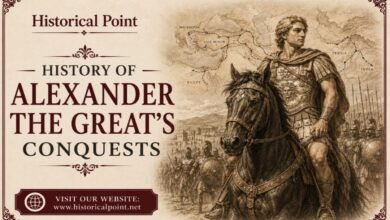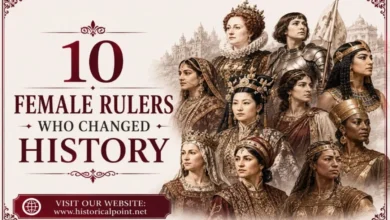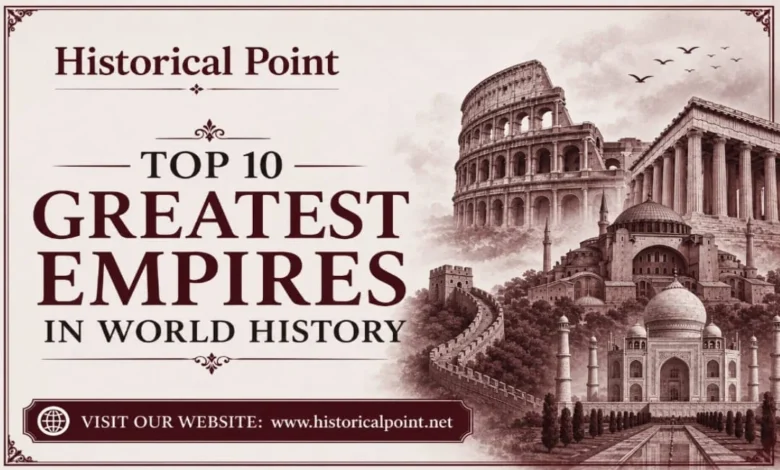
Throughout history, powerful empires have shaped the world through conquest, trade, culture, science, administration, and technological innovation. Some lasted for centuries, while others expanded rapidly before collapsing. Their legacies can still be seen in modern languages, borders, architecture, laws, and cultures. Here are 10 of the greatest empires in world history, chosen for their size, influence, longevity, and historical significance.
1. British Empire
The British Empire became the largest empire in history at its peak, controlling territories across every inhabited continent. At its height in the early 20th century, it covered roughly a quarter of the world’s land area. Britain spread its language, political institutions, legal traditions, and economic systems around the globe. Although the empire largely disappeared after World War II, English remains one of the world’s most influential languages.
2. Mongol Empire
Founded by Genghis Khan in the 13th century, the Mongol Empire became the largest contiguous land empire ever created. Mongol armies conquered enormous territories across Asia and Europe. Despite its reputation for warfare, Mongol rule also encouraged trade and communication along the Silk Road. The empire connected distant civilizations and helped facilitate the movement of goods, technologies, and ideas.
3. Roman Empire
The Roman Empire dominated much of Europe, North Africa, and the Middle East for centuries. Rome is remembered for its sophisticated roads, engineering, military organization, legal system, and administration. Roman influence remained powerful long after the Western Empire fell in 476 CE. Roman law, architecture, Latin, and political ideas continue to influence the modern world.
4. Ottoman Empire
The Ottoman Empire lasted for more than six centuries, from 1299 until 1922. From its heartland in Anatolia, it expanded across southeastern Europe, the Middle East, and North Africa. The empire reached its height under rulers such as Suleiman the Magnificent and became a major center of Islamic culture, architecture, trade, and administration.
5. Persian Empire
The ancient Achaemenid Persian Empire, founded by Cyrus the Great, was one of the world’s earliest superpowers. It stretched from the Balkans and Egypt to Central Asia and the Indus Valley. Persian rulers developed sophisticated systems of provincial administration, taxation, roads, and communication. The empire demonstrated how a vast and diverse territory could be governed through organized administration.
6. Mughal Empire
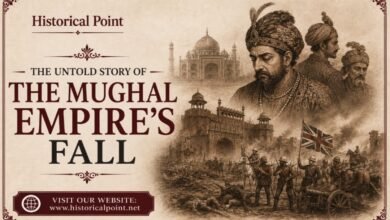
The Mughal Empire ruled much of the Indian subcontinent from the 16th to the 19th century. Founded by Babur, it reached extraordinary cultural and economic heights under rulers including Akbar and Shah Jahan. Mughal architecture produced masterpieces such as the Taj Mahal, while the empire also contributed to art, literature, administration, and cuisine.
7. Chinese Empire
Imperial China was not a single continuous dynasty but a succession of powerful dynasties, including the Han, Tang, Song, Ming, and Qing. China developed major innovations such as papermaking, printing, gunpowder, and the compass. Its enormous population, sophisticated bureaucracy, economy, and cultural influence made it one of history’s most enduring centers of civilization.
8. Byzantine Empire
The Byzantine Empire, also known as the Eastern Roman Empire, survived for nearly a thousand years after the fall of Rome in the West. Constantinople became a major center of trade, Christianity, scholarship, and diplomacy. Byzantine art and architecture, particularly the Hagia Sophia, left a lasting mark on the Mediterranean and Eastern Europe.
9. Inca Empire
The Inca Empire was the largest empire in pre-Columbian America. Centered in the Andes, it developed an impressive network of roads, bridges, agricultural terraces, and administrative centers. Despite having no conventional writing system, the Incas maintained control over a vast mountainous territory through sophisticated organization and communication.
10. Abbasid Caliphate
The Abbasid Caliphate became one of the most important intellectual and cultural powers of the medieval Islamic world. Baghdad emerged as a major center of scholarship during the Islamic Golden Age. Scientists, mathematicians, physicians, philosophers, and translators contributed enormously to fields including astronomy, medicine, mathematics, and literature.
The Lasting Legacy of Great Empires
These empires were different in geography, religion, political structure, and culture, but each profoundly influenced human history. Their achievements and conflicts shaped languages, trade routes, political systems, architecture, technology, and cultural traditions that continue to influence societies today.
History is not simply about who conquered the most land—it is about how civilizations changed the world and what they left behind.