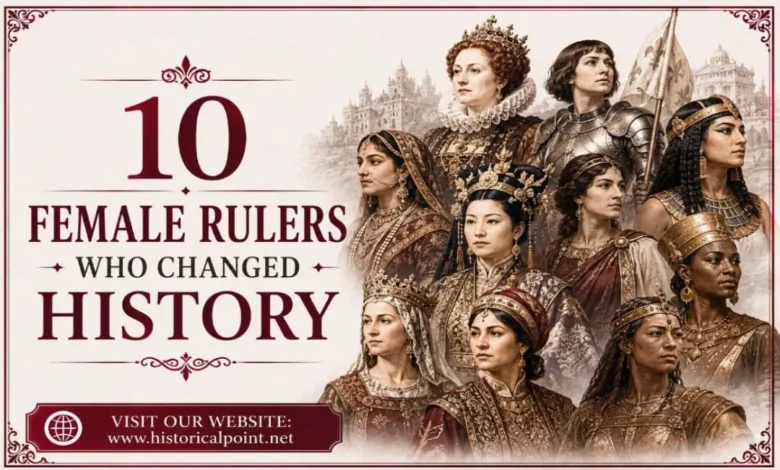
Throughout history, women have ruled powerful kingdoms and empires, led armies, shaped politics, and influenced the course of civilizations. From Cleopatra of Egypt to Empress Wu Zetian of China, these remarkable women challenged the expectations of their time.
Here are 10 female rulers who changed history through leadership, ambition, military power, and political influence.
1. Cleopatra VII – Queen of Egypt
Cleopatra VII was the last active ruler of the Ptolemaic Kingdom of Egypt. She became queen in 51 BCE and was known for her intelligence, political skills, and ability to speak several languages.
Cleopatra formed important political alliances with Julius Caesar and later Mark Antony. Her struggle against Rome ultimately ended with the Roman conquest of Egypt.
Her life and political career made her one of the most famous female rulers in ancient history.
2. Hatshepsut – Pharaoh of Egypt
Hatshepsut was one of ancient Egypt’s most successful female pharaohs. She ruled during the 15th century BCE and focused on trade, construction, and economic development.
She commissioned impressive monuments and expanded Egypt’s trade networks. Her reign is often remembered as a period of prosperity and stability.
3. Empress Wu Zetian – China
Wu Zetian became the only woman in Chinese history to officially rule China as emperor in her own right.
She ruled during the Tang period and introduced administrative reforms while strengthening the imperial government.
Wu Zetian remains one of the most powerful women in Chinese history.
4. Queen Elizabeth I – England
Elizabeth I ruled England from 1558 to 1603 during one of the country’s most important historical periods.
Her reign saw major developments in English culture, exploration, and naval power. England’s defeat of the Spanish Armada in 1588 became one of the defining events of her reign.
The period is often called the Elizabethan Age.
5. Queen Victoria – Britain
Queen Victoria ruled the United Kingdom from 1837 to 1901.
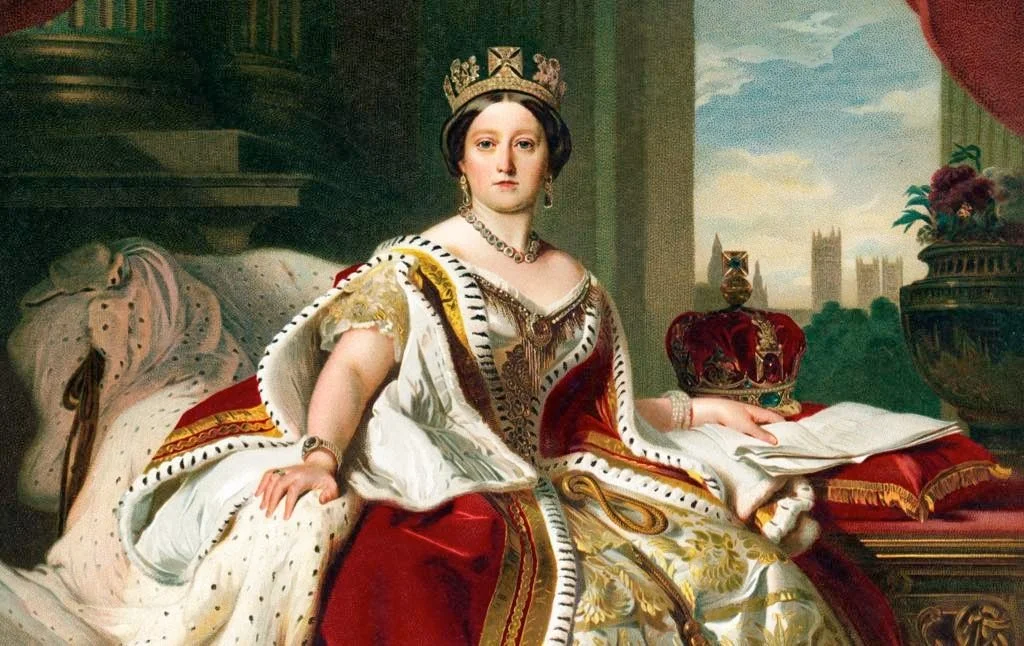
Her reign lasted more than six decades and coincided with the expansion of the British Empire, industrialization, and major social changes.
The Victorian era became one of the most influential periods in British history.
6. Razia Sultan – Delhi Sultanate
Razia Sultan was the first and only woman to rule the Delhi Sultanate in her own right.
She became sultan in 1236 and attempted to strengthen central authority despite opposition from powerful nobles.
Although her reign was short, Razia remains an important figure in South Asian history.
Many powerful rulers shaped the ancient world through military victories and territorial expansion. Alexander the Great’s conquests also transformed the ancient world and created one of history’s largest empires.
7. Empress Theodora – Byzantine Empire
Theodora, wife of Emperor Justinian I, was one of the most influential women in the Byzantine Empire.
She played an important role in government and advised Justinian during major political crises, including the Nika Revolt.
She also supported reforms concerning women’s rights and social welfare.
8. Queen Nzinga – Angola
Queen Nzinga ruled in the 17th century in parts of present-day Angola.
She became famous for her diplomatic and military resistance against Portuguese expansion.
Nzinga used alliances, negotiations, and military strategy to defend her kingdom’s independence.
9. Empress Maria Theresa – Habsburg Monarchy
Maria Theresa ruled the Habsburg lands during the 18th century.
She introduced major administrative, military, educational, and economic reforms.
Her reign strengthened the Habsburg state and made her one of the most important European rulers of her era.
10. Queen Seondeok – Korea
Queen Seondeok became the first female ruler of the Korean kingdom of Silla.
She supported Buddhism, education, science, and cultural development. The famous Cheomseongdae astronomical observatory is traditionally associated with her reign.
Her rule demonstrated that women could hold significant political authority in ancient Korea.
The Legacy of Female Rulers
These women came from very different cultures and historical periods, but they shared one important quality: the ability to exercise power in societies where political authority was often dominated by men.
Some expanded their territories, others introduced reforms, while many used diplomacy and political strategy to protect their kingdoms.
Their stories also show that women have played an important role in shaping world history for thousands of years.
Conclusion
From Cleopatra and Hatshepsut in ancient Egypt to Elizabeth I and Queen Victoria in Europe, female rulers have left an extraordinary mark on history.
Their achievements, struggles, and political decisions continue to attract historians and readers today. These 10 female rulers who changed history are only a small selection of the many powerful women who shaped civilizations across the world.