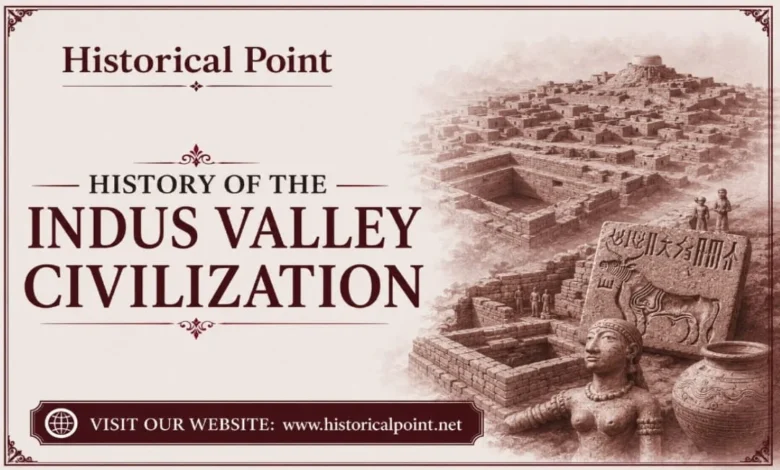
The Indus Valley Civilization was one of the world’s earliest urban civilizations and one of the most remarkable cultures of the ancient world. Flourishing thousands of years ago across parts of present-day Pakistan and northwestern India, it developed well-planned cities, advanced drainage systems, long-distance trade, and a sophisticated urban culture.
Although much about this civilization remains unknown, archaeological discoveries continue to reveal how advanced the people of the Indus Valley were.
When Did the Indus Valley Civilization Flourish?
The Indus Valley Civilization developed gradually from earlier farming communities. Its mature urban phase generally dates from around 2600 BCE to 1900 BCE.
At its height, the civilization covered a vast area along the Indus River and its surrounding regions.
Unlike ancient Egypt, which was centered around the Nile, the Indus civilization consisted of numerous settlements connected through trade, agriculture, and shared cultural traditions.
Mohenjo-daro and Harappa
Two of the most famous archaeological sites are Mohenjo-daro and Harappa.
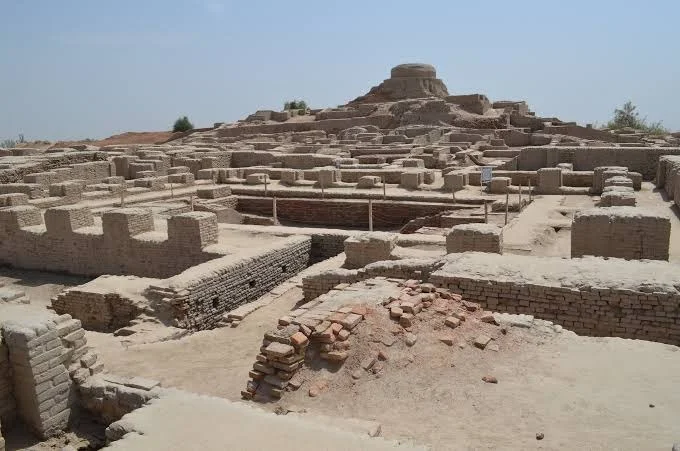
Mohenjo-daro, located in present-day Sindh, was a remarkably planned city. Its streets followed an organized layout, while many houses had wells, bathrooms, and drainage systems.
Harappa, located in present-day Punjab, was another major urban center.
Moreover, both cities demonstrate that Indus Valley society had sophisticated systems for construction, sanitation, trade, and urban planning.
Advanced Urban Planning
One of the most impressive achievements of the Indus Valley Civilization was its urban planning.
Many cities were constructed using standardized baked bricks. Streets were often arranged in organized patterns, and sophisticated drainage systems helped manage wastewater.
The famous Great Bath of Mohenjo-daro is one of the civilization’s most important structures. Although its exact purpose is uncertain, it may have had religious or ceremonial significance.
Therefore, the remains of these cities provide strong evidence of a highly organized society.
Agriculture and Trade
Agriculture was the foundation of the Indus Valley economy.
Farmers cultivated crops such as wheat, barley, peas, and sesame. They also raised animals including cattle, sheep, and goats.
In addition, the Indus people participated in long-distance trade.
Archaeological discoveries suggest connections with regions including Mesopotamia, Afghanistan, and parts of Central Asia. Archaeologists have discovered Indus-style objects and materials far beyond the main Indus Valley region.
These trade networks helped the civilization acquire valuable resources that were not available locally.
The Indus Script
One of the greatest mysteries of the Indus Valley Civilization is its writing system.
Archaeologists have discovered thousands of inscriptions on seals, pottery, and other objects. However, the Indus script has not yet been conclusively deciphered.
As a result, historians still do not know exactly what many of these inscriptions say.
If the script is successfully deciphered in the future, it could provide valuable information about the civilization’s rulers, religion, language, economy, and society.
Religion and Society
The religious beliefs of the Indus people remain uncertain because their written language has not been deciphered.
Archaeologists have discovered figurines, seals, animal representations, and other objects that may have had religious or symbolic meanings.
However, historians must be cautious when interpreting these discoveries because there is limited direct evidence explaining their exact significance.
The society appears to have been highly organized, but unlike ancient Egypt or Mesopotamia, archaeologists have found relatively little evidence of enormous royal palaces or monumental royal tombs.
Why Did the Indus Valley Civilization Decline?
Around 1900 BCE, many major Indus cities began to decline.
For many years, historians debated whether warfare or invasion caused the civilization’s collapse. Today, researchers generally consider a combination of environmental and social factors.
Changes in the monsoon climate, weakening river systems, declining agricultural productivity, and disruptions in long-distance trade may have contributed to the transformation of urban society.
Importantly, the people of the Indus Valley did not simply disappear. Instead, populations appear to have shifted toward smaller settlements and other regions.
Legacy of the Indus Valley Civilization
The Indus Valley Civilization left an extraordinary archaeological legacy.
Its standardized bricks, sophisticated drainage systems, urban planning, craft production, and long-distance trade demonstrate a level of organization that was remarkable for its time.
Sites such as Mohenjo-daro and Harappa continue to provide important clues about one of the world’s earliest urban societies.
Furthermore, the civilization forms an important part of the ancient history of South Asia and remains a major subject of archaeological research.
Conclusion
The history of the Indus Valley Civilization is a story of innovation, urban development, trade, and mystery. From the planned streets of Mohenjo-daro to the ancient settlements of Harappa, its achievements reveal a highly organized civilization that flourished thousands of years ago.
Although many questions remain unanswered, especially concerning the Indus script and the civilization’s decline, archaeological discoveries continue to expand our understanding.
The Indus Valley Civilization remains one of the most fascinating chapters in ancient history, and its legacy continues to shape our understanding of early human civilization.