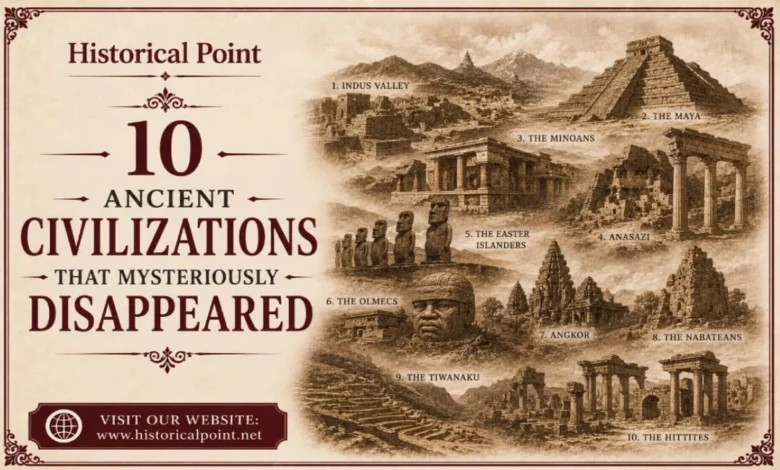
Throughout history, great civilizations have risen, built impressive cities, developed advanced cultures, and then mysteriously declined. However, some ancient civilizations left behind so many unanswered questions that historians and archaeologists still debate what happened to them.
From the Minoans of Crete to the Maya civilization of Central America, these societies demonstrate how powerful civilizations can change or disappear over time.
1. Maya Civilization
The Maya civilization developed across parts of present-day Mexico, Guatemala, Belize, Honduras, and El Salvador. They built impressive cities, developed sophisticated calendars, and made important advances in mathematics and astronomy.
However, many major Maya cities were gradually abandoned between the 8th and 10th centuries. Climate change, prolonged droughts, warfare, political instability, and resource shortages may have contributed to their decline.
Importantly, the Maya people did not completely disappear. Their descendants continue to live in Central America today.
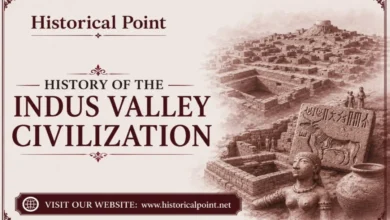
2. Indus Valley Civilization
The Indus Valley Civilization was one of the world’s earliest urban civilizations. It flourished around 2500 BCE across parts of modern-day Pakistan and northwestern India.
Cities such as Mohenjo-daro and Harappa featured organized streets, drainage systems, and impressive urban planning.
Nevertheless, many major cities declined after around 1900 BCE. Changes in climate, weakening trade networks, river shifts, and environmental pressures may have played a role.
The exact reason for the civilization’s transformation remains uncertain.
3. Minoan Civilization
The Minoan civilization flourished on the island of Crete during the Bronze Age. The Minoans built large palace complexes, developed extensive trade networks, and produced remarkable artwork.
Around the middle of the second millennium BCE, the civilization suffered major disruptions. The eruption of the Thera volcano, earthquakes, economic problems, and later Mycenaean influence may all have contributed to its decline.
4. Ancestral Puebloans
The Ancestral Puebloans lived in the southwestern regions of present-day United States. They constructed remarkable settlements, including the famous cliff dwellings of Mesa Verde.
Over time, many communities were abandoned around the 13th century.
Extended droughts, environmental changes, population pressures, and social conflict are among the explanations proposed by researchers.
Their descendants, however, continued to live in other parts of the region.
5. Cahokia
Cahokia was one of the largest urban centers in ancient North America. Located near present-day St. Louis, it may have had a population of tens of thousands at its peak.
The city was famous for its enormous earthen mounds, including Monks Mound.
Eventually, Cahokia declined after around the 13th century. Climate changes, flooding, resource pressures, political instability, and changes in regional trade may have contributed to its abandonment.
6. Mycenaean Civilization
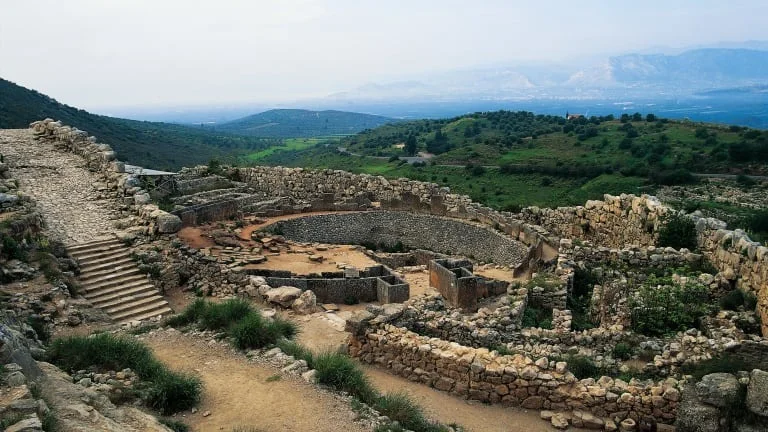
The Mycenaean civilization dominated much of mainland Greece during the Late Bronze Age.
The Mycenaeans built fortified cities, controlled trade routes, and developed an early form of Greek writing known as Linear B.
However, around 1200 BCE, many Mycenaean centers were destroyed or abandoned. Warfare, political instability, economic disruption, and wider Bronze Age collapse are possible explanations.
7. Nabataean Kingdom
The Nabataean Kingdom was an ancient Arab kingdom centered around the famous city of Petra in modern-day Jordan.
The Nabataeans became wealthy by controlling important trade routes and developing sophisticated water-management systems.
Eventually, Roman expansion reduced their independence. In 106 CE, the Romans formally annexed the Nabataean kingdom.
Although the kingdom disappeared politically, its remarkable architectural legacy survived.
8. Khmer Empire
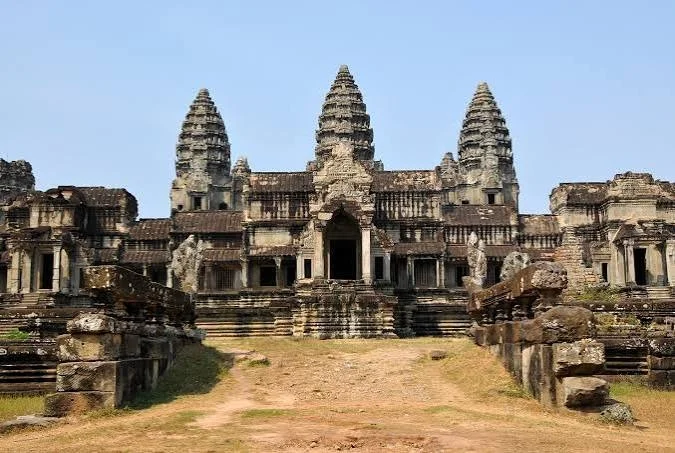
The Khmer Empire became one of Southeast Asia’s most powerful civilizations. Its capital, Angkor, contained enormous temples and sophisticated water-management systems.
The empire gradually declined between the 14th and 15th centuries.
Among the possible causes were climate changes, droughts, flooding, warfare, economic problems, and shifting trade routes.
Angkor was never completely forgotten, and the temple complex remains one of the world’s most remarkable archaeological sites.
9. Tiwanaku Civilization
The Tiwanaku civilization developed near Lake Titicaca in the Andes of South America.
It became a major political and cultural center and was known for impressive stone architecture and agricultural techniques.
Nevertheless, Tiwanaku declined around the 10th century. Extended drought and environmental changes may have reduced agricultural productivity and weakened the civilization.
10. The Olmec Civilization
The Olmec civilization flourished in parts of ancient Mesoamerica between approximately 1500 and 400 BCE.
The Olmecs are famous for their enormous colossal stone heads, sophisticated artwork, and influence on later Mesoamerican cultures.
Eventually, their major centers declined. Environmental changes, changes in trade, and political or social transformations may have contributed to their disappearance as a distinct civilization.
Why Did Ancient Civilizations Disappear?
There was rarely a single reason why an ancient civilization declined. Instead, civilizations could be affected by several problems at the same time.
Climate change, drought, warfare, political instability, disease, economic collapse, migration, and environmental pressure could gradually weaken societies.
In many cases, people did not simply vanish. Rather, they migrated, adapted, merged with neighboring populations, or developed new political and cultural systems.
Conclusion
The story of these 10 ancient civilizations that mysteriously disappeared reminds us that even powerful societies are vulnerable to change.
Although their political systems may have collapsed, their achievements survived through ruins, artwork, technology, traditions, and archaeological discoveries.
Today, researchers continue to study these civilizations to understand not only how ancient societies developed, but also why some of them eventually declined and transformed into something new.